
Client Solutions

  • ASSOCIATION MANAGEMENT

    American Loggers Council

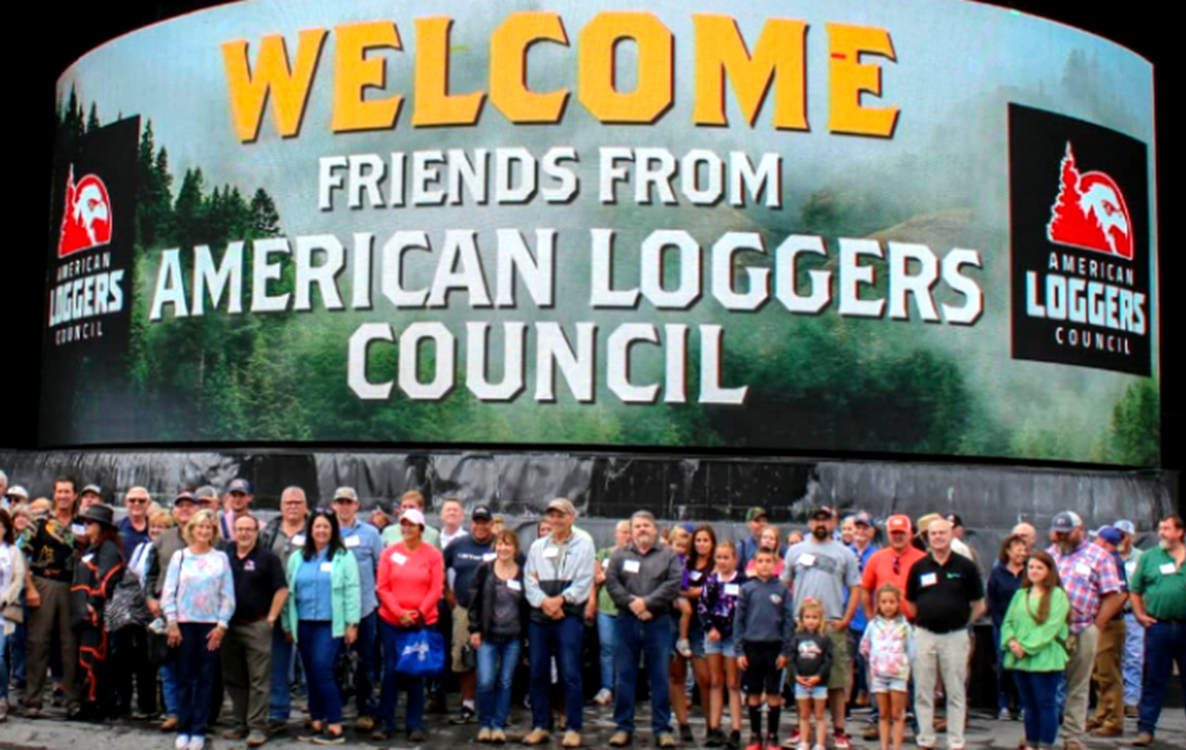
    Working with our client the American Loggers Council (ALC), we assist the council in their mission to be the national voice of professional loggers, uniting independent loggers with key resources, advocacy, and networking opportunities. Our services for the Council include event planning and hosting, supporting the executive committee and board of directors, website and social media maintenance, and grant writing and administration services. 

    In partnership with the U.S. Forest Service we administered the Biomass Transportation Incentive Pilot for the ALC. The project was an innovative, first-of-its-kind pilot that significantly incentivized and rapidly mobilized the forest industry to remove dangerous woody debris from National Forest Service lands in priority wildfire landscapes in California and Oregon.

    The award-winning project was extraordinarily successful and exceeded all expectations of pace and scale by transporting 113,226 green tons of wildfire fuels from 4,151 acres in nine National Forests in less than eight months.

    Read More

    In addition to substantially mitigating wildfire risk, this cross-agency pilot delivered incredible environmental benefits by reducing open pile burning and the related 122,388 tons of greenhouse gas emissions that would have been emitted.

    Another key environmental and economic benefit of the project is that the waste would have otherwise been open pile burned or left in the woods as fuel for catastrophic wildfires. Instead, it was transported to biomass power plants to generate renewable electricity for the electric grid and one forest products facility to produce peeled poles, firewood, and animal bedding.

    Based on the success of the pilot, the Forest Service developed the Hazardous Fuels Transportation Assistance Program, which we are administering for the ALC. This multi-year program further mitigates wildfire risk in the Western U.S. by providing financial assistance to remove hazardous fuel from national forestlands. 
    leaves texture
  • DATA ANALYSIS, RESOURCE PLANNING, AND UTILIZATION STUDIES

    Missouri Shortleaf Pine Utilization Assessment

    The Missouri Shortleaf Pine Utilization Assessment serves as a comprehensive and strategic resource for the Forest and Woodland Association of Missouri (FWAM), federal and state agencies, loggers, sawmills, and secondary wood product manufacturers by identifying key opportunities to expand markets for Missouri-grown shortleaf pine.

    This study was initiated by FWAM with the Missouri Department of Conservation, the L-A-D Foundation, and the Mark Twain National Forest to address market constraints and the underutilization of Missouri’s shortleaf pine resource. By evaluating current and emerging market trends, industry capacity, and production feasibility, the report provides a clear roadmap for investment, innovation, and sustainable market expansion.

    Strengthening markets will, in turn, support state-led priorities — such as those outlined in Missouri’s Comprehensive Conservation Strategy — while advancing broader landscape restoration goals, including the ones established in the Shortleaf Pine Initiative, Shortleaf Pine Restoration Plan. By integrating these objectives, the assessment presents a framework that balances economic growth, forest restoration, and the long-term sustainability of Missouri’s shortleaf pine resource.

    Read more

    The report was divided into three parts:

    Resource Assessment — A synopsis of the historical and ecological significance of shortleaf pine in the state and the restoration challenges associated with its sustainability. Utilizing USDA Forest Inventory and Analysis and project partners in Missouri’s shortleaf pine inventory, the resource is characterized by current distribution, ownership, age structure, diameter class, operability, and projected growth over the next 30 years.

    Market Assessment — An in-depth analysis of Missouri’s forest industry capacity, wood utilization trends, growth-to-drain ratios and resource potential under various harvest scenarios. The report also examines the mechanical and physical properties of Missouri-grown, non-plantation shortleaf pine lumber, and explores potential forest products markets from shavings to mass timber. In addition, the assessment presents opportunities for industry collaboration, including the potential for developing a state-wide branding initiative: Missouri Shortleaf Pine — Strength Rooted in Tradition.

    Business Plan — A sample business plan presenting the expansion of a shavings packaging facility into a manufacturing facility to procure local shortleaf pine and produce shavings in-house to their markets across the country. The business plan includes information on supply needs, processing equipment, labor requirements and production volumes. This business plan was used as the basis for a federal grant for a local Missouri pellet mill to increase utilization of shortleaf pine and brought in $1 million to the state.  

    This publication was produced for FWAM with support from the Missouri Department of Conservation in partnership with the L-A-D Foundation, the Mark Twain National Forest, and the Missouri Forest Products Association. The work this report is based on was funded in part by a grant from the USDA Forest Service.

    leaves texture
  • VALUE-ADDED SUPPORT

    Grant-Writing to Support Innovation, Sustainability, and Training of the Next Generation

    Through our specialized grant-writing services, we have helped secure more than $20 million for our regional partners to achieve significant wins in advancing wood products innovation, forest education, and long-term resource land stewardship.


    Wood Innovations Grant Success with Ottawa Forest Products

    We recently prepared successful Wood Innovations Grant applications for Ottawa Forest Products of Amasa, MI. The awards will provide critical federal support to increase efficiency and productivity at OFP’s mill operations, including new equipment installations, employee training, and improvements that enhance both competitiveness and sustainability.

    “This funding from the U.S. Forest Service has allowed OFP to remain competitive in an environment where we compete locally for employees and globally with other producers,” says Derik VanEpern, Manager at Ottawa Forest Products. “The new technology helps us make better use of our renewable natural resources and provides employees with opportunities to learn new skills and technologies that will benefit them throughout their careers.”


    Read More

    Expanding Forestry Education at Forest Park School

    In partnership with Forest Park Schools, we worked with VanOss Forestry to coordinate a major school forest event in 2025 that engaged nearly 300 participants — including over 250 students, in grades 6-12, teachers, conservation professionals, and industry leaders.

    Hands-on learning stations featured contributions from the Michigan DNR, U.S. Forest Service, Iron/Baraga Conservation District, American Bird Conservancy, NRCS, MSU Forestry Technician Program, Shamco, and VanOss Forestry, who also serves as the school forester. Students explored tree identification, forest management, conservation law, wildlife, forest sector careers, and wood products manufacturing.

    The event was supported in part by the John E. Force Forestry Education Fund, which helped cover costs to make the trip possible. The collaboration between RRS, VanOss Forestry, Forest Park School District, local partners and industry professionals, along with JEFFEF funding, gave students a firsthand look at how sustainable forest management, industry innovation, and education all work together in Michigan’s forest sector.

    “This trip helped me see that forestry isn’t just about trees — it’s about people, wildlife, and keeping things balanced,” remarked one excited Forest Park High School student. “I could really see myself doing this kind of work some day.”


    Supporting the John E. Force Forestry Education Fund 

    We also continue to work closely with the Sustainable Resources Institute (SRI) on the John E. Force Forestry Education Fund. Since its creation in 2015, JEFFEF has supported over 3,000 students with more than $15,000 in funding for forestry education, including field trips, classroom resources, and improvements to public forest areas.

    The fund honors the legacy of consulting forester John E. Force, who dedicated his career to teaching young people about forestry and natural resources. Contributions to the fund can be sent to the Sustainable Resources Institute, 337 Superior Avenue, Crystal Falls, MI 49920, and are fully tax deductible.

    leaves texture
  • NATURAL RESOURCE MANAGEMENT

    Restoring Critical Deer Habitat in the Upper Peninsula

    For nearly a decade, we have partnered with the Sustainable Resources Institute and Safari Club International to bring together landowners, foresters, and wildlife professionals to improve habitat conditions and landscape connectivity for game, non-game, and sensitive species.

    The overarching mission is to support a healthy, stable whitetail deer population while bolstering the local economy and enhancing habitat for a variety of wildlife species.

    Our work has included developing winter shelter through conifer planting, and conducting small-scale deciduous mast plantings, forestry mulching, conifer release treatments, and mechanical and chemical site preparation to manage invasive species.

    We have also conducted direct restoration work and engaged landowners in sustainable forest management practices such as promoting timber harvests, developing forest management plans, and building connections to consulting foresters.

    Read more

    To make all this happen, we utilized funding from Safari Club International and grants from the Michigan DNR Wildlife Habitat Grant program, which focuses on the enhancement of Michigan’s Upper Peninsula Deer Wintering Complexes. These projects span over 500 acres across the UP — maintaining, repairing, rehabilitating, regenerating, and recovering critical deer habitat.

    leaves texture
  • OUTREACH AND EDUCATION

    Educating a Broad Cross-Section of Professionals on the “Why’s” and “How’s” of Mass Timber

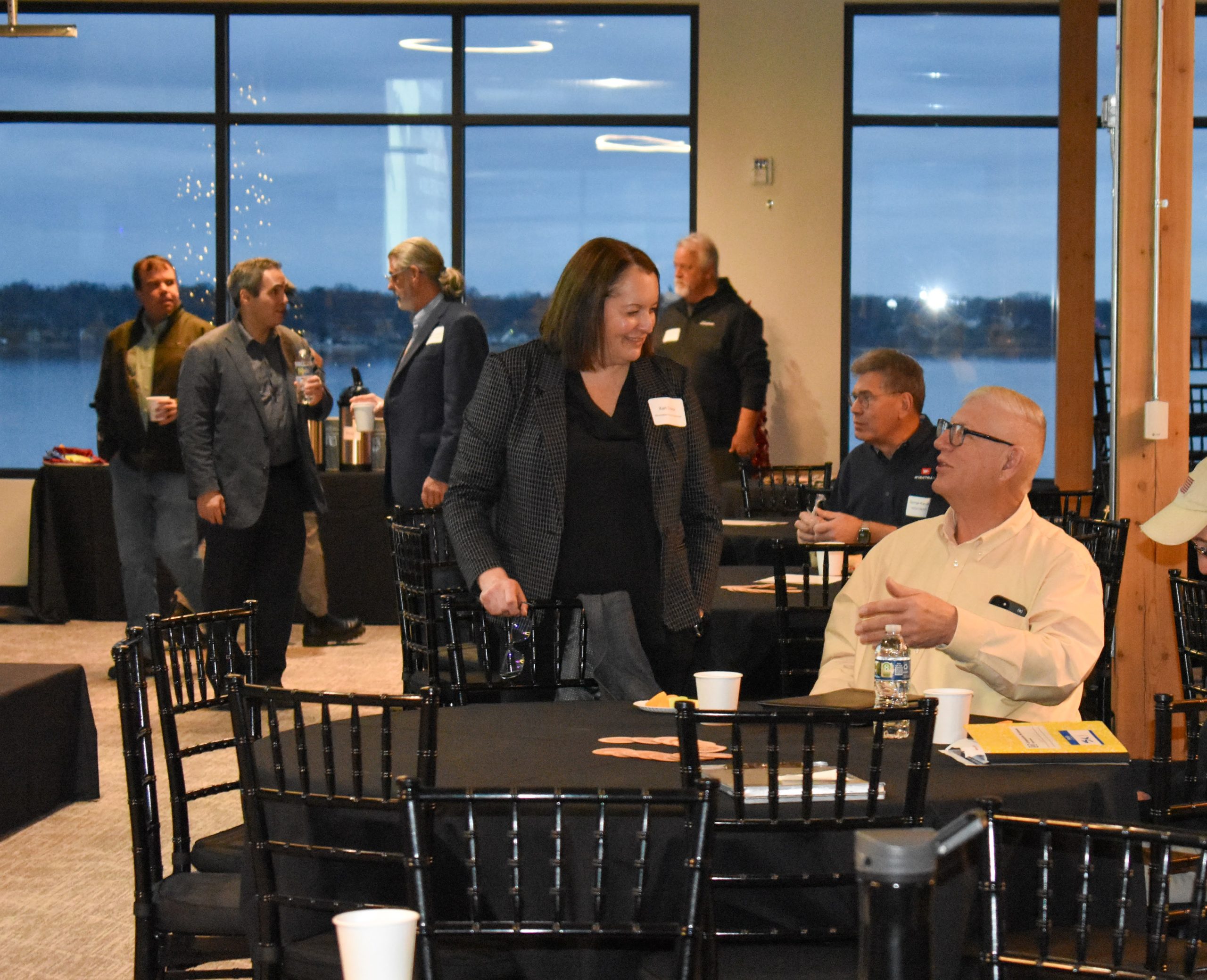
    To promote Michigan’s growing mass timber industry, we partner with Michigan State University (MSU) and the Michigan Dept. of Natural Resources (MDNR) to convene an annual educational gathering of architectural, design, construction, and forest industry professionals, academics, and students engaged in mass timber projects, research, and initiatives.

    A key part of our education and outreach regime is not only time spent in classrooms learning the latest tools and trends in mass timer, but actually getting to see the beginning stages and end results of mass timber projects in action.

    For instance, to demonstrate the beauty and utility of this unique building material, the annual Michigan Mass Timber Update event is held on-site at a mass timber building or project location in Michigan. Events have taken place in MSU’s mass timber building in East Lansing, at the Union Carpenters and Millwrights Skilled Training Center in Detroit, at Adelaide Point in Muskegon, and at the Kalamazoo Country Club in Kalamazoo.

    Read more

    Mass timber is an umbrella term for a variety of huge, engineered wood building construction materials that can be used like steel or concrete in large buildings — even skyscrapers. After emerging in Europe about 40 years ago, mass timber materials are now gaining market share across the United States and in Michigan because they offer benefits including efficient construction and a lower carbon footprint.

    Mass timber demand has more than quintupled in the U.S. since 2018, and Michigan now has more than 50 mass timber buildings in the pipeline, which is why people are looking to Michigan as a mass timber leader in the Great Lakes Region and Eastern United States.

    Recent advancements in Michigan include:

    • Adoption of the 2021 Michigan Building Code which defines three new mass timber building types, including a category of up to 18 stories.
    • The Michigan Department of Natural Resources (DNR) completion of its new customer service center in Newberry, the first building to use mass timber panels made from Michigan red pine.
    • The state’s 2025 budget includes a $1 million investment — to be programmed by the DNR — to “aid in the research and development of a mass timber market in Michigan.”
    leaves texture